




Hobbies · 3 min
How to Learn to Knit as a Complete Beginner
Nutshell Two sticks, one ball of yarn and a couple of evenings. What to buy, which four skills to learn in what order, and a first project you will actually finish.
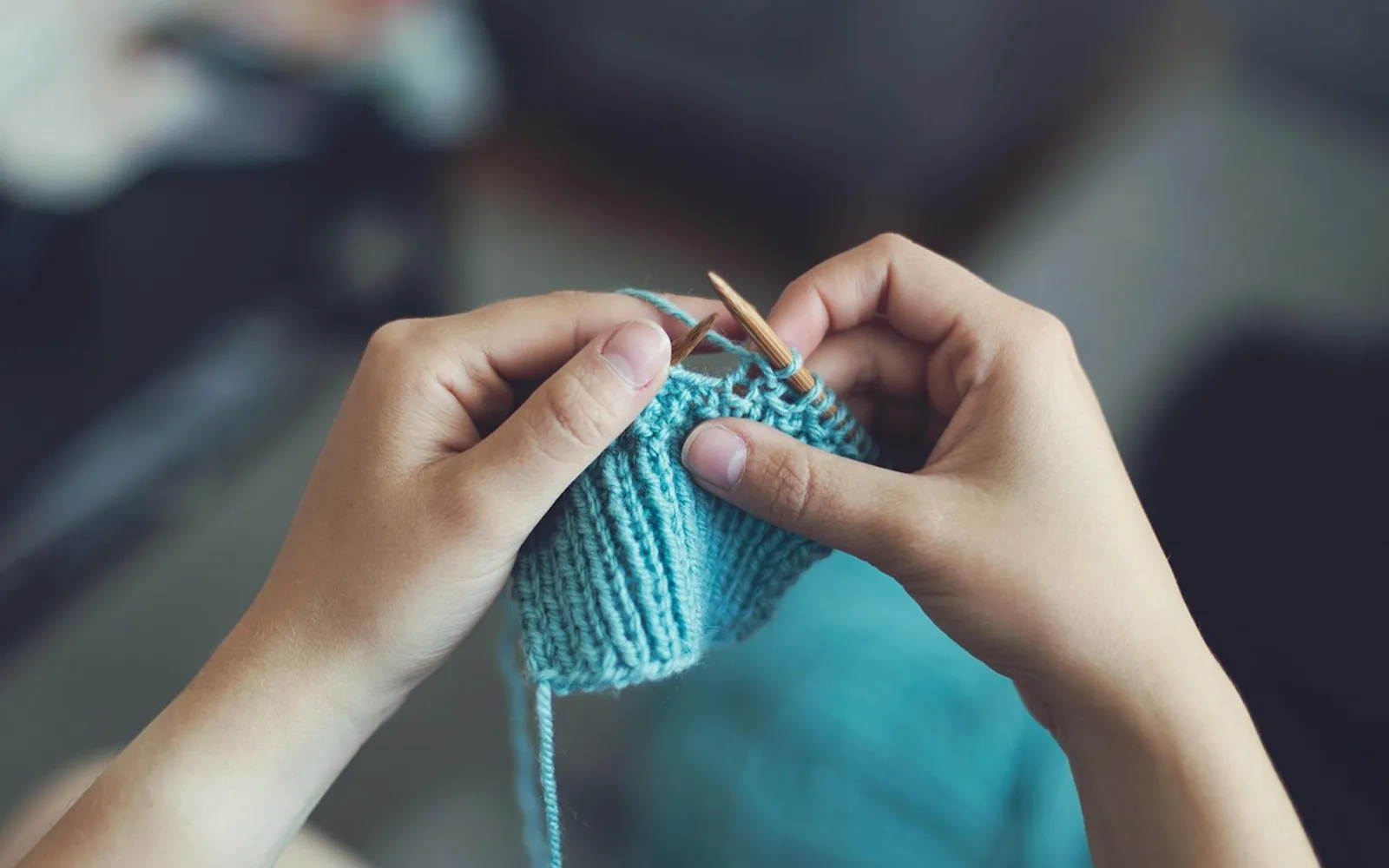
Knitting has a reputation for being slow and fiddly, and for the first half hour it is. Then something clicks. Your hands find a rhythm, the rows start to stack up, and suddenly you are holding a piece of fabric you made from a single strand of yarn. The fastest way to get there is to keep the first attempt small, buy the right starter materials and learn the skills in a sensible order.
What to buy (and what to skip)
Craft shops are full of tempting gadgets. You need very little to begin:
- One ball of smooth, light-coloured yarn. A worsted or aran weight in wool, acrylic or a blend is easy to handle. Pale colours make each stitch easier to see; fluffy, dark or very thin yarns hide your mistakes from you.
- One pair of straight needles in the size printed on the yarn label. Bamboo or wooden needles are a little grippy, which stops stitches sliding off while you learn.
- Scissors and a blunt tapestry needle for weaving in the ends when you finish.
Skip the big kits, cable needles and novelty yarns for now. They are fun later, once the basics feel natural.
The four skills, in order
- Casting on puts the first row of loops onto a needle. The knitted cast-on is a friendly first method because it uses the same motion as the knit stitch. The long-tail cast-on gives a neater edge and is worth learning soon after.
- The knit stitch is the foundation of everything. Insert the right needle into the front of a loop, wrap the yarn, pull it through and slide the old loop off. Repeat until the row is done, then swap needles between hands.
- The purl stitch is the knit stitch done from the other side, with the yarn held in front. Learning it unlocks smooth stockinette fabric.
- Binding off (also called casting off) locks the last row so nothing unravels. Knit two stitches, lift the first over the second, and keep going.
Videos help a lot here, because knitting is about movement. Watch one technique at a time, pause often and copy the hand position before worrying about speed.
Your first project
A square dishcloth in cotton yarn or a short scarf in garter stitch is ideal. Garter stitch simply means knitting every row, so you only need one stitch, and the fabric lies flat without curling. Cast on around twenty to thirty stitches, knit until the piece is square or as long as you like, then bind off.
| Project | Skills used | Why it works |
|---|---|---|
| Garter-stitch dishcloth | Cast on, knit, bind off | Small, quick, useful even if uneven |
| Simple scarf | Cast on, knit, bind off | Lots of practice rows, no shaping |
| Stockinette cushion cover | Adds purl rows | A good second project once purling feels easy |
| Basic hat on circular needles | Knitting in the round, decreases | Next step when you want a new challenge |
Common beginner snags
Extra stitches appearing
If your piece slowly gets wider, you are probably wrapping the yarn over the needle by accident at the start of a row, or knitting into both legs of the first stitch. Count stitches every few rows until it stops happening.
Stitches too tight to move
New knitters often grip hard. Relax your hands, let the yarn run through your fingers and push each new loop onto the thick part of the needle before tightening.
A dropped stitch
It happens to everyone. A crochet hook makes picking it back up easy, and on a first dishcloth you can even leave it. A small hole is proof you made it by hand.
Make practice a habit
Fifteen relaxed minutes in the evening teaches more than one frustrated three-hour session. Some knitters keep a small notebook for needle sizes, stitch counts and the projects they want to try next; if that appeals, our guide on starting a bullet journal shows a neat way to track it all. A local yarn shop or library knitting circle is also a lovely place to ask questions, because experienced knitters can usually spot a problem in seconds.
For more ideas on pastimes that keep your hands busy and your mind off the screen, have a look around our Hobbies section.
Got a topic idea?
Suggestions help us plan.